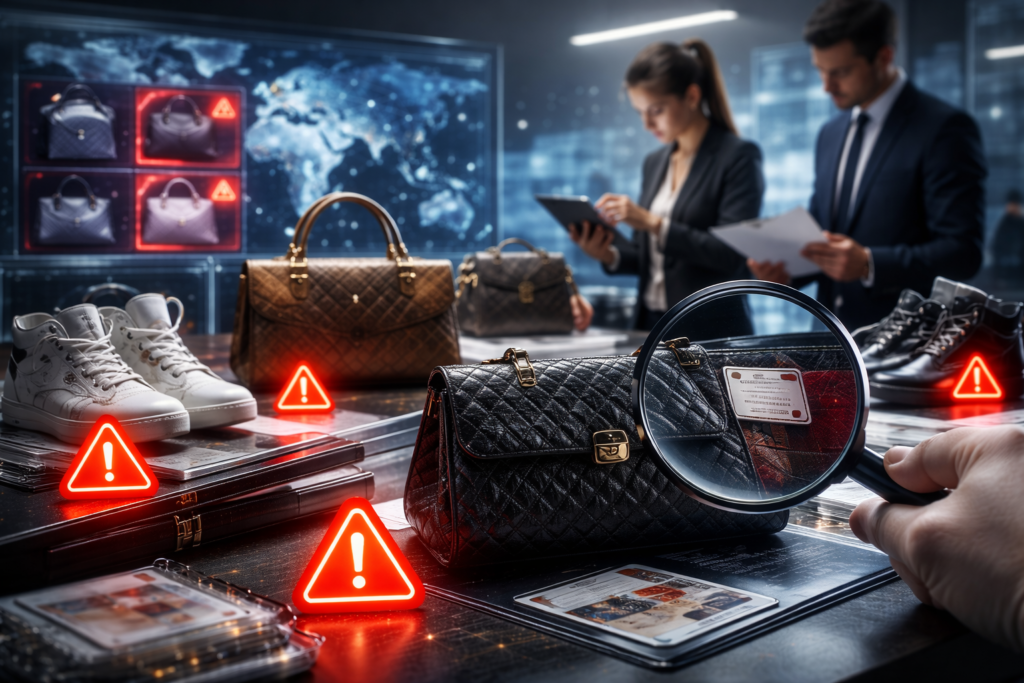
Brand Protection
Counterfeiting: A Rapidly Expanding Trade Threatening Brands and Consumers
Counterfeiting continues to grow worldwide. Once mainly associated with luxury goods, it now affects virtually every industry: toys, cosmetics, clothing, accessories, electronics, pharmaceuticals, automotive parts, and everyday consumer products.
Over the past three years, French customs authorities have removed more than 60 million counterfeit products from the market, a record figure highlighting the increasing scale of the problem. Counterfeit products do not comply with safety, quality, or traceability standards, directly exposing consumers to health, technical, and financial risks.
According to the Mapping Global Trade in Fakes 2025 report by the EUIPO and OECD, counterfeit trade represented 2.3% of global trade in 2021 and up to 4.7% of EU imports.
Counterfeiting Has Become Increasingly Structured and Digital
Criminal networks now heavily rely on e-commerce platforms, online marketplaces, express freight services, and social media to distribute counterfeit products.
- Fragmented shipments
- Dropshipping practices
- Seller anonymization
- Small parcels that are more difficult to inspect
Authorities are also observing the rise of polycriminality, where networks involved in counterfeiting are simultaneously engaged in other illicit activities such as drug trafficking and tobacco smuggling.
Major Seizures in 2025
May 2025
Customs officers in Bayonne seized 517,425 counterfeit games and toys. During the inspection, 2.5 kg of cannabis resin were also discovered inside one carton.
September 2025
French customs seized 50,000 counterfeit plush toys, figurines, and keychains distributed through local markets and major transport routes.
The French Customs Response
French customs authorities continuously adapt their enforcement methods. Inspections are reinforced during peak consumption periods such as Black Friday, summer holidays, and the end-of-year festive season.
Enforcement operations particularly target highly viral consumer products, goods heavily promoted on social media, and sensitive categories such as cosmetics and perfumes.
A Strategic Challenge for Brands
Beyond direct financial losses, counterfeiting significantly damages brand image and consumer trust. Every counterfeit product distributed online or offline can lead to brand dilution, legal and reputational risks, unfair competition, and safety risks for end users.
Companies must adopt a comprehensive brand protection strategy
- Online monitoring
- Proactive detection
- Marketplace and social media surveillance
- Cooperation with authorities
- Structured evidence collection
- Rapid takedown and enforcement actions