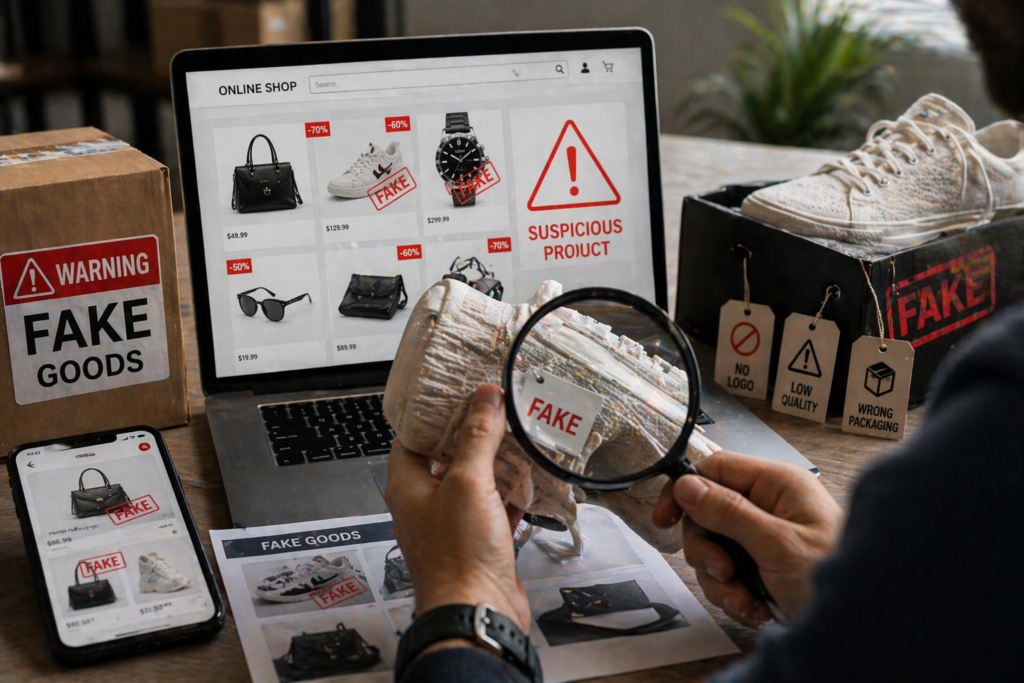
Counterfeit Products: The Central Role of the Trademark in Deception
In the digital economy, trademark infringements are not limited to the fraudulent use of a name or logo. They are very often linked to the sale of counterfeit products distributed through marketplaces, e-commerce websites, social media platforms, or parallel distribution channels.
Two Distinct Concepts, but Closely Connected
Trademark infringement consists of using, without authorization, a protected sign such as a name, logo, trade name, or distinctive element likely to create confusion with a registered trademark.
Product counterfeiting refers to the manufacture, import, distribution, or sale of goods imitating authentic products. In many cases, these products also reproduce the distinctive signs of the brand in order to strengthen their credibility with buyers.
Why Counterfeiters Use Trademarks
A counterfeit product derives much of its value from the trademark it imitates. The name, logo, packaging, or visual codes of a well-known brand are used to attract attention, reassure the consumer, and justify a purchase decision.
Digital Channels Amplify the Phenomenon
Marketplaces, social media platforms, independent e-commerce websites, and online advertising facilitate the rapid spread of suspicious products. Sellers can multiply listings, change trade names, use official images, and redirect buyers to platforms that are difficult to monitor.
- Fake products sold under a reproduced or imitated logo.
- Listings using the brand name in the title or description.
- Fraudulent websites reproducing the visual identity of a brand.
- Sponsored ads directing users to unauthorized products.
- Social media profiles imitating a brand or official distributor.
Multiple Risks for Rights Holders
The connection between trademark infringement and product counterfeiting can create significant economic, legal, and reputational impacts. Consumers may attribute the defects of a fraudulent product to the authentic brand, particularly where quality, safety, or compliance are not guaranteed.
For companies, the risk is therefore not limited to lost sales. It may also affect customer trust, perceived quality, relationships with official distributors, and the ability to effectively enforce intellectual property rights.
A Combined Monitoring Approach
An effective brand protection strategy must analyze both unauthorized uses of distinctive signs and indicators related to the products themselves: images, abnormally low prices, inconsistent descriptions, seller identity, shipping country, customer reviews, or domain history.
- Detection of unauthorized uses of brand names, logos, and keywords.
- Visual analysis of suspicious products and packaging.
- Monitoring of sellers, domains, platforms, and distribution channels.
- Prioritization of cases according to commercial and legal risk levels.
- Preparation of takedown actions, notifications, or legal escalation measures.
Trademark infringement is very often the driving force behind product counterfeiting. By exploiting the identity, reputation, and trust attached to a brand, fraudsters strengthen the commercial credibility of illicit products. Effective protection therefore requires comprehensive monitoring combining the analysis of distinctive signs, products, sellers, and digital channels.